
If you’ve ever typed a question into Google and clicked one of the first few results without a second thought, you’ve already experienced SEO doing its job. You just didn’t see the work behind it.
SEO is the reason some websites show up the moment you search, while others sit buried on page seven where nobody ever scrolls. It’s not luck, and it’s not magic. It’s a set of deliberate decisions a website makes about its content, its structure, and its reputation. Get those decisions right, and search engines, along with AI tools like ChatGPT and Google’s AI Overviews, start sending you visitors for free, day after day, without you paying a single rupee per click.
In this guide, we’ll break down exactly what SEO is, how it works behind the scenes, why it’s the backbone of digital marketing, and how it’s evolving now that people search through AI chatbots almost as often as they use a search box. By the end, you’ll know enough to start applying SEO to your own website today.
What Is SEO?
SEO stands for Search Engine Optimization. It is the practice of shaping a website’s content, structure, and reputation so that search engines, and increasingly AI systems, can understand it, trust it, and show it to the people searching for it.
In simpler words, SEO is how you earn a spot in front of someone who’s already looking for what you offer, without paying for an ad.
Every time someone types a query such as “best mobile phones under 30000,” “how to start a bakery business,” or “digital marketing agency near me,” a search engine has to decide, out of billions of web pages, which handful deserve to appear first. SEO is the discipline of making your page one of those chosen few.
It’s worth noting that SEO isn’t a single trick or a one-time task. It’s an ongoing combination of three things:
- What’s on your page (your content, keywords, headings)
- How your website is built (speed, mobile-friendliness, structure)
- What the rest of the internet says about you (links, mentions, reviews)
When all three line up, search engines reward you with visibility. When even one is broken, your rankings suffer, no matter how good the other two are.
Why SEO Matters in Digital Marketing
Paid ads stop the moment your budget runs out. Social media reach rises and falls with the algorithm’s mood. But a well-optimized page can keep pulling in visitors for years after you hit “publish,” and that’s what makes SEO one of the highest-return channels in digital marketing.
Here’s the practical case for SEO:
- It targets people who are already looking. Unlike a billboard or a random social ad, someone searching “how does SEO work” or “best running shoes for flat feet” has already raised their hand. You’re not interrupting them; you’re answering them.
- It’s cost-efficient at scale. You invest time and effort up front in research and content, and unlike with PPC, you don’t pay per click. A page that ranks well can keep sending free traffic for months or years.
- It builds trust. Most people instinctively trust organic, unpaid results more than ads, because they know Google didn’t get paid to put that result there.
- It compounds. Every new optimized page, every earned backlink, and every technical fix adds to your site’s overall authority, which makes the next piece of content easier to rank too.
- It’s no longer just about Google. SEO now also decides whether your brand gets mentioned inside an AI-generated answer on ChatGPT, Perplexity, or Google’s AI Mode, a newer and increasingly important channel that we’ll cover in a dedicated section below.
How Do Search Engines Actually Work?
To optimize for search engines, it helps to understand what they’re doing behind the scenes. Search engines like Google follow three core steps.
1. Crawling
Search engines send out automated programs called crawlers (also known as spiders or bots) that travel across the web, moving from link to link, discovering new and updated pages. If your page has no links pointing to it and isn’t submitted anywhere, a crawler may never find it.
2. Indexing
Once a crawler finds a page, the search engine tries to understand what it’s about, including the topic, the structure, the images, and the language, and stores that information in a massive database called the index. If a page fails to load properly, is blocked by mistake, or offers almost nothing of value, it may be skipped or excluded from the index entirely.
3. Ranking
When someone types a search query, the search engine doesn’t search the live web in real time. Instead, it searches its index and runs the query through a ranking algorithm. This algorithm weighs hundreds of signals, including relevance, content quality, site speed, mobile usability, and backlinks, to decide the order of results in a matter of milliseconds.
A simple way to remember it: crawl it, understand it, rank it.
What Google Actually Wants
Behind every algorithm update is one consistent goal. Google wants to give searchers the most useful, trustworthy answer as fast as possible. That’s it. Every ranking factor Google has ever introduced, from page speed to backlinks to mobile-friendliness, ultimately traces back to that one goal. If you keep asking, “does this genuinely help the person searching?”, you’re already thinking the way Google’s algorithm is designed to reward.
How SEO Works in AI Search (AEO Explained)
Search hasn’t stayed the same, and neither has SEO. Tools like ChatGPT, Google’s AI Overviews, and Perplexity don’t hand you ten blue links anymore. They read across the web and hand you a single, synthesized answer, often with a few sources cited.
This shift is why you’ll now hear the term AEO, or Answer Engine Optimization, alongside SEO. AEO is the practice of structuring and writing content so that AI systems can understand it, trust it, and quote it directly inside their answers.
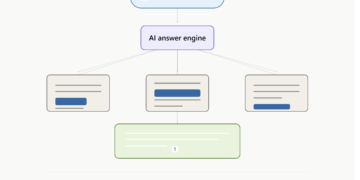
Here’s roughly how an AI answer engine processes your query:
- Query interpretation. The AI reads your question and works out what you actually mean, not just the words you typed.
- Breaking the question down. Complex questions often get split into smaller sub-questions behind the scenes, so the AI can research each angle separately.
- Retrieving relevant passages. Instead of matching exact keywords, the system searches by meaning, pulling passages that answer the question even if they use different words than your search.
- Writing the answer. The AI composes a natural-language response using what it retrieved, often citing a small number of sources.
The practical takeaway is that ranking first on Google no longer guarantees you’ll be the one an AI tool quotes. Being cited by AI depends on how clearly your content answers a specific question, how well it’s structured (short, direct passages beat long rambling paragraphs), and how much the rest of the web already trusts your brand.
How to Optimize for AI Answer Engines (AEO Basics)
- Answer the question directly, early. Put the clearest, most complete answer to the main question in the first one to three sentences of a section. AI systems favor content that gets straight to the point.
- Use clear headings that match real questions. Headings phrased as actual questions, such as “What is SEO?” or “How do search engines rank pages?”, are easier for AI to match against a user’s query.
- Break content into short, self-contained passages. Each section should make sense even if it’s pulled out and quoted on its own.
- Add structured data (schema markup). FAQ schema, article schema, and how-to schema help both search engines and AI systems parse your content’s meaning.
- Earn mentions on trusted third-party sites. AI tools lean heavily on what respected, independent sources say about a topic or brand, not just what you say about yourself.
- Keep facts accurate and current. AI systems are cautious about citing outdated or contradictory information, so keeping stats, prices, and dates updated matters more than ever.
The good news is that everything that makes content strong for AEO also strengthens it for traditional SEO. You’re not choosing between the two; you’re building one strategy that works across both.
The 4 Main Types of SEO
Most SEO work falls into four buckets. A strong strategy touches all four, because focusing on just one leaves gaps that the others were meant to cover.
1. On-Page SEO
This covers everything you control directly on your own page:
- Writing content that thoroughly answers the searcher’s intent
- Using your target keyword naturally in the title, headings, URL, and body
- Writing clear title tags and meta descriptions
- Structuring content with proper headings (H1, H2, H3) so both readers and search engines can follow it
- Adding descriptive alt text to images
- Linking to other relevant pages on your own site (internal linking) and to credible external sources
2. Technical SEO
This is the “engine room” work that makes sure search engines can actually access and understand your site:
- Fast page load speed
- Mobile-friendly, responsive design
- A clean, logical site structure with a sitemap
- Secure, working URLs (HTTPS, no broken links)
- No accidental blocks that stop crawlers from indexing your pages
A brilliant article on a broken, slow website still won’t rank. Technical SEO is what lets your content be seen in the first place.
3. Off-Page SEO
This is everything that happens away from your own website that still affects how much search engines trust you:
- Backlinks from reputable, relevant websites
- Brand mentions across forums, communities, and news sites, even without a link
- Social proof and reviews
- Guest content and digital PR
A handful of links from genuinely respected sites in your niche will do far more for your rankings than dozens of low-quality ones.
4. Local SEO
For businesses that serve a physical area, such as clinics, restaurants, salons, or agencies, local SEO focuses on showing up in “near me” searches and map results:
- A complete, verified Google Business Profile
- Consistent business name, address, and phone number (NAP) across the web
- Local reviews and location-specific content
- Local keyword targeting (e.g., “digital marketing agency in Faisalabad”)
What Actually Influences Rankings? (Key Ranking Factors)
Search engines never publish their full algorithm, but years of testing and Google’s own public guidance point to a consistent set of factors that matter most.
| Factor | Why It Matters |
|---|---|
| Content relevance & depth | Does the page fully answer what the searcher wants, not just part of it? |
| E-E-A-T (Experience, Expertise, Authoritativeness, Trustworthiness) | Does the content show real, first-hand knowledge, and can readers trust that it’s accurate? |
| Backlinks | Do other credible sites vouch for this page by linking to it? |
| Page speed & Core Web Vitals | Does the page load quickly and feel stable and responsive? |
| Mobile-friendliness | Does the page work well on a phone, where most searches now happen? |
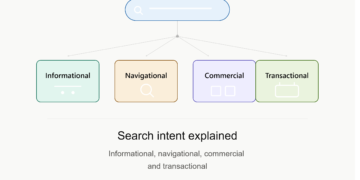
| Search intent match | Does the page match what the searcher actually wants: information, a product, a comparison, or a how-to? |
| Site security (HTTPS) | Is the connection to the site encrypted and safe? |
| User experience signals | Do visitors stay, read, and engage, or bounce straight back to the results page? |
None of these are shortcuts. They all point back to the same principle: build something genuinely useful, and make it easy for both machines and humans to access.
SEO vs. Paid Search (PPC): What’s the Difference?
People often confuse the two, but they work in opposite ways.
| SEO (Organic) | PPC (Paid Search) | |
|---|---|---|
| Cost | No cost per click, only time and effort to create and maintain content | You pay every time someone clicks your ad |
| Speed | Takes weeks to months to build momentum | Can generate traffic almost immediately |
| Longevity | Keeps working long after you stop actively updating | Stops the moment you stop paying |
| Trust | Generally seen as more credible by searchers | Known to be paid, so often trusted less |
| Best for | Long-term brand building, evergreen topics, sustainable growth | Product launches, time-limited offers, quick tests |
The strongest digital marketing strategies rarely pick one over the other. They use PPC for speed and immediate demand, and SEO for compounding, long-term visibility.
How to Get Started With SEO: A Step-by-Step Plan
If you’re beginning from zero, here’s a practical order to work through.
1. Do keyword research. Find out what your audience is actually typing into search engines and AI tools. Look for a mix of high-intent keywords (people ready to act) and informational keywords (people still learning). (Internal link: link this to your own keyword research guide, e.g. /keyword-research-guide/)
2. Understand search intent before you write. Check what’s already ranking for your target keyword. If the top results are product pages, a blog post probably won’t outrank them, and the reverse is also true. Match the format people expect.
3. Create genuinely useful content. Go deeper or clearer than what’s already ranking. Add real examples, original insights, or first-hand experience- the things a generic AI-written page can’t fake.
4. Optimize your on-page elements. Work your target keyword naturally into the title, first paragraph, headings, URL, and image alt text, without forcing it.
5. Fix your technical foundation. Check your site speed, mobile responsiveness, and crawlability. Tools like Google Search Console will flag the biggest issues for free.
6. Build internal links. Link new content to relevant older articles on your site, and vice versa. This helps both readers and search engines discover more of your content, and it spreads authority across your site. (Internal link: connect this to your on-page SEO or technical SEO guide, e.g. /on-page-seo-explained/ and /technical-seo-checklist/)
7. Earn backlinks and mentions. Reach out for guest posts, contribute helpful answers in relevant communities, and create content worth referencing, such as original data, unique research, or a genuinely useful tool.
8. Track and adjust. Use Google Search Console and Google Analytics to see what’s working. Watch impressions, clicks, and rankings, and refine underperforming pages instead of abandoning them.
Common SEO Mistakes to Avoid
- Keyword stuffing: repeating a keyword unnaturally instead of writing for humans first
- Ignoring search intent: writing a blog post for a keyword that actually wants a product page
- Publishing thin content: pages that don’t fully answer the question rarely rank or get cited by AI
- Skipping internal linking: orphaned pages with no links in or out are harder for search engines to find and rank
- Neglecting mobile experience: most searches now happen on phones, and a clunky mobile site quietly kills rankings
- Chasing rankings instead of usefulness: the sites that last are the ones solving a real problem for a real reader
Frequently Asked Questions
What does SEO mean in simple words?
SEO means Search Engine Optimization: improving a website so search engines and AI tools understand it, trust it, and show it to people searching for related topics, without paying for ads.
How long does SEO take to show results?
Most websites start seeing meaningful movement within three to six months, with stronger results building over six to twelve months. SEO is a compounding strategy, not an instant one. Unlike paid ads, its effects build up and stay.
Is SEO still relevant now that people use AI chatbots to search?
Yes, arguably more relevant. AI answer engines still pull their information from the same web that search engines crawl and index. Strong SEO fundamentals, such as relevance, trust, and clear structure, are exactly what earns a citation inside an AI-generated answer too.
What’s the difference between SEO and digital marketing?
Digital marketing is the umbrella term covering every online channel, including SEO, PPC, social media, email, and content marketing. SEO is one discipline inside that umbrella, focused specifically on earning free, organic visibility in search results.
Can I do SEO myself, or do I need an expert?
The fundamentals, such as keyword research, on-page optimization, and basic technical fixes, are learnable by anyone willing to invest time. Complex technical issues or highly competitive niches often benefit from an experienced SEO specialist.
What’s the single most important SEO ranking factor?
There isn’t one silver bullet. Content that genuinely and clearly answers the searcher’s question, backed by a technically sound and trustworthy website, consistently outperforms every shortcut.