
Two people can type completely different words into Google and want the same thing. Two other people can type the same word and want completely different things. “Apple” could mean the fruit, the company, or the nearest store. Google has to guess which one you mean, every single time, in a fraction of a second. That guess is called search intent, and it’s the single most overlooked reason content fails to rank even when the keyword research looks perfect.
This guide breaks down what search intent actually is, the six types you’ll run into today (yes, six, not just the classic four), how to spot the intent behind any keyword, and how to shape content that matches it. This is the concept that sits underneath the query mentioned in our guide on what SEO is and how it works, so if you haven’t read that yet, it’s worth starting there.
What Is Search Intent?
Search intent (also called user intent or query intent) is the underlying goal a person has when they type a search query. It’s not the words themselves; it’s the reason behind the words. Someone searching “best running shoes” isn’t looking for a definition of running shoes; they’re comparing options before buying a pair.
Search engines exist to satisfy intent, not just to match keywords. That’s why Google can show a recipe website for “chicken curry,” and a restaurant map pack for “chicken curry near me,” even though the keyword overlap is nearly identical. The words are similar. The intent is completely different.
Getting this right matters because content that answers the wrong intent rarely ranks, no matter how well it’s written. A detailed 3,000-word article explaining “what is a mortgage” will struggle to outrank a mortgage calculator tool for the query “mortgage calculator,” because the searcher didn’t want an explanation. They wanted a tool.
The 4 Classic Types of Search Intent
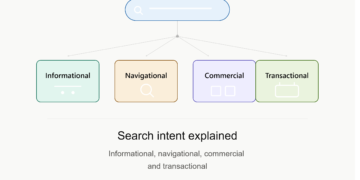
Most SEO guidance is built around four core categories. Understanding these first gives you the foundation everything else builds on.
1. Informational Intent
The searcher wants to learn something. They’re not ready to buy anything; they just want an answer, an explanation, or a how-to.
Typical signals: questions starting with what, how, why, when, who; phrases like “guide,” “tutorial,” “meaning,” or “examples.”
Example queries: “how does SEO work,” “what is a meta description,” “why is the sky blue”
Roughly 70 to 80 percent of all searches fall into this category, making it the largest single intent group by far. If you’re building a content strategy from scratch, informational content is usually the easiest entry point because there’s less commercial competition fighting for the same result.
What ranks well: blog posts, guides, definitions, explainer videos, FAQ pages. Content should get to the answer quickly, then expand with detail, examples, and context.
2. Navigational Intent
The searcher already knows exactly where they want to go; they’re just using the search bar instead of typing the URL directly.
Typical signals: a brand name, product name, or specific page combined with a generic word, such as “login,” “support,” “app,” or “download.”
Example queries: “Facebook login,” “Netflix customer support,” “Semrush keyword tool”
What ranks well: almost always the brand’s own official page. Third-party content rarely outranks the brand itself for navigational queries. If you’re the brand being searched, the priority isn’t creating new content; it’s making sure your own site is properly indexed, fast, and easy to find so you don’t lose your own branded searches to someone else.
3. Commercial Intent (Commercial Investigation)
The searcher has decided they want to solve a problem through a purchase, but they haven’t picked a specific product or provider yet. They’re comparing.
Typical signals: “best,” “top,” “vs,” “review,” “alternatives,” “comparison”
Example queries: “best SEO tools for beginners,” “Semrush vs Ahrefs,” “top project management software”
What ranks well: comparison articles, roundups, in-depth reviews, and “best of” lists. These readers respond to honesty. A comparison that only flatters one option reads as biased and gets abandoned quickly; the searchers that convert best are the ones who feel like they got an unbiased breakdown of the trade-offs.
4. Transactional Intent
The searcher has already decided. They’re ready to act right now.
Typical signals: “buy,” “order,” “subscribe,” “download,” “sign up,” “discount,” “near me,” “price”
Example queries: “buy running shoes online,” “sign up for Semrush free trial,” “pizza delivery near me”
What ranks well: product pages, pricing pages, sign-up pages, and local listings. These pages should remove friction, not add explanation. A long, wordy introduction in front of a “buy now” button is the fastest way to lose a transactional searcher who already made up their mind before they typed anything.
The 2 Newer Types of Search Intent
Search behavior has shifted enough in the last few years that two more categories are now worth treating separately, rather than folding them into the four classics above.
5. Local Intent
The searcher wants a result tied to a specific physical location, right now or nearby. This overlaps with transactional and informational intent, but it deserves its own category because it triggers a completely different set of results: map packs, business listings, directions, and hours.
Typical signals: “near me,” a city or neighborhood name, “open now,” “closest”
Example queries: “dentist near me,” “digital marketing agency in Faisalabad,” “coffee shop open now”
What ranks well: a complete Google Business Profile, consistent business listings across the web, and location-specific landing pages. Traditional blog content rarely wins these searches; the map pack and local listings dominate the results instead.
6. Generative or AI Search Intent
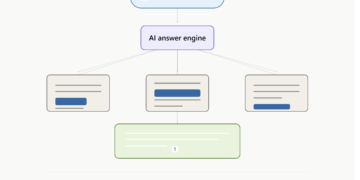
This is the newest shift, driven by tools like ChatGPT, Google’s AI Overviews, and Perplexity. The searcher doesn’t just want a list of links; they want a synthesized, conversational answer, often phrased as a full question rather than a short keyword.
Typical signals: longer, natural-language questions (“what’s the difference between X and Y for a small business with a tight budget”), follow-up style phrasing, comparison requests that expect a direct recommendation rather than a list of options to click through
Example queries: “which is better for a beginner, SEO or paid ads, if I only have a small monthly budget,” “explain search intent like I’m new to marketing”
What ranks well (or rather, what gets cited): content structured in short, self-contained, directly-answered passages. AI systems pull from pages that answer a specific question clearly in the first few sentences, not pages that bury the answer under a long introduction. This is the same principle covered in more depth in our guide on how SEO works in AI search.
Why Search Intent Matters More Than the Keyword Itself
Two keywords can look almost identical in a keyword research tool and still require completely different content.
Take “SEO” and “what is SEO.” Both are technically about the same topic, but “SEO” alone is ambiguous; it could mean someone wants a definition, a tool, an agency, or a course. “What is SEO” is unmistakably informational. A page built for one won’t necessarily satisfy the other, even though a keyword tool might group them as similar search volume.
This is also why Google actively reshapes its results as intent shifts. A query like “turkey” shows different results in the weeks before Thanksgiving (recipes, cooking times) than it does the rest of the year (the country, travel guides). The keyword hasn’t changed; the collective intent behind it has.
Matching intent correctly does three things for your SEO and AI search visibility:
- It gets you ranked in the first place. Search engines actively demote content that doesn’t match the intent behind a query, regardless of quality or keyword usage.
- It gets you clicked. A searcher who sees a title and preview that clearly match what they wanted is far more likely to click through than one who’s unsure the page will help them.
- It gets you cited by AI. AI answer engines favor content that directly and clearly resolves the specific question being asked, which is really just intent-matching taken to its most literal extreme.
How to Identify the Search Intent Behind Any Keyword
You don’t need expensive tools to figure out intent. Follow this simple process:
1. Read the query itself. Look for the signal words covered above (how, best, buy, near me, login). Often the query tells you the intent directly.
2. Google the keyword and look at what’s already ranking. This is the most reliable method. If the top 10 results are all blog posts, Google has decided the intent is informational, and a product page won’t compete no matter how well optimized it is. If the top results are all product listings, the intent is transactional.
3. Check the SERP features. Featured snippets and “People also ask” boxes usually signal informational intent. Shopping carousels and ads signal commercial or transactional intent. A local map pack signals local intent.
4. Notice the content format that dominates. Are the top results long guides, short definitions, videos, tools, or comparison tables? Whatever format wins consistently is the format Google (and increasingly AI search) has decided best satisfies that specific query.
5. Ask what the person does immediately after clicking. Do they read and leave? Compare and click again? Buy and exit? Picture their next action. It’s usually the fastest gut-check for intent.
Matching Content to Intent: A Quick Reference
| Intent | What the searcher wants | Best content format |
|---|---|---|
| Informational | To learn or understand something | Guides, blog posts, definitions, FAQs |
| Navigational | A specific site or brand | Your own optimized homepage or landing page |
| Commercial | To compare before deciding | Comparison posts, reviews, “best of” roundups |
| Transactional | To act right now | Product pages, pricing pages, sign-up forms |
| Local | A nearby physical result | Google Business Profile, local landing pages |
| Generative/AI | A direct, synthesized answer | Short, clearly structured Q&A style passages |
Common Mistakes With Search Intent
- Writing a blog post for a transactional keyword. If someone searches “buy wireless earbuds,” a 2,000-word history of Bluetooth technology won’t satisfy them, no matter how well researched it is.
- Assuming one page can rank for every related keyword. A single article rarely satisfies informational and transactional intent equally well. It’s usually better to build two focused pages than to force one page to do both jobs.
- Ignoring how intent shifts over time. Seasonal, trending, or newly regulated topics can shift intent quickly. A keyword that was purely informational a year ago might now carry strong commercial intent if new products or services have entered that space.
- Copying a competitor’s format without asking why it ranks. If every top result for a keyword is a comparison table, publishing a plain opinion essay in that spot is fighting the intent Google has already established, not working with it.
Frequently Asked Questions
What are the 4 main types of search intent?
The four classic types are informational (learning something), navigational (finding a specific site), commercial (comparing options before buying), and transactional (ready to act now, such as buying or signing up).
Are there more than 4 types of search intent?
Increasingly, yes. Many SEO practitioners now also track local intent (searches tied to a nearby physical location) and generative or AI intent (longer, conversational questions aimed at getting a direct synthesized answer from tools like ChatGPT or Google’s AI Overviews), bringing the practical total to six.
How do I find the search intent of a keyword?
The most reliable method is to search the keyword yourself and study what’s already ranking. The format, structure, and SERP features Google shows (guides, product listings, a map pack, a comparison table) reveal the intent Google has already assigned to that query.
Why does search intent matter for SEO?
Content that doesn’t match the intent behind a query rarely ranks well, even if it’s well written and properly optimized, because search engines prioritize satisfying the searcher’s actual goal over rewarding keyword usage alone.
Can one page target multiple types of search intent?
Sometimes, particularly commercial and transactional intent together, such as on a well-built product page that both compares features and offers a clear way to buy. But mixing informational and transactional intent on the same page usually weakens both.